
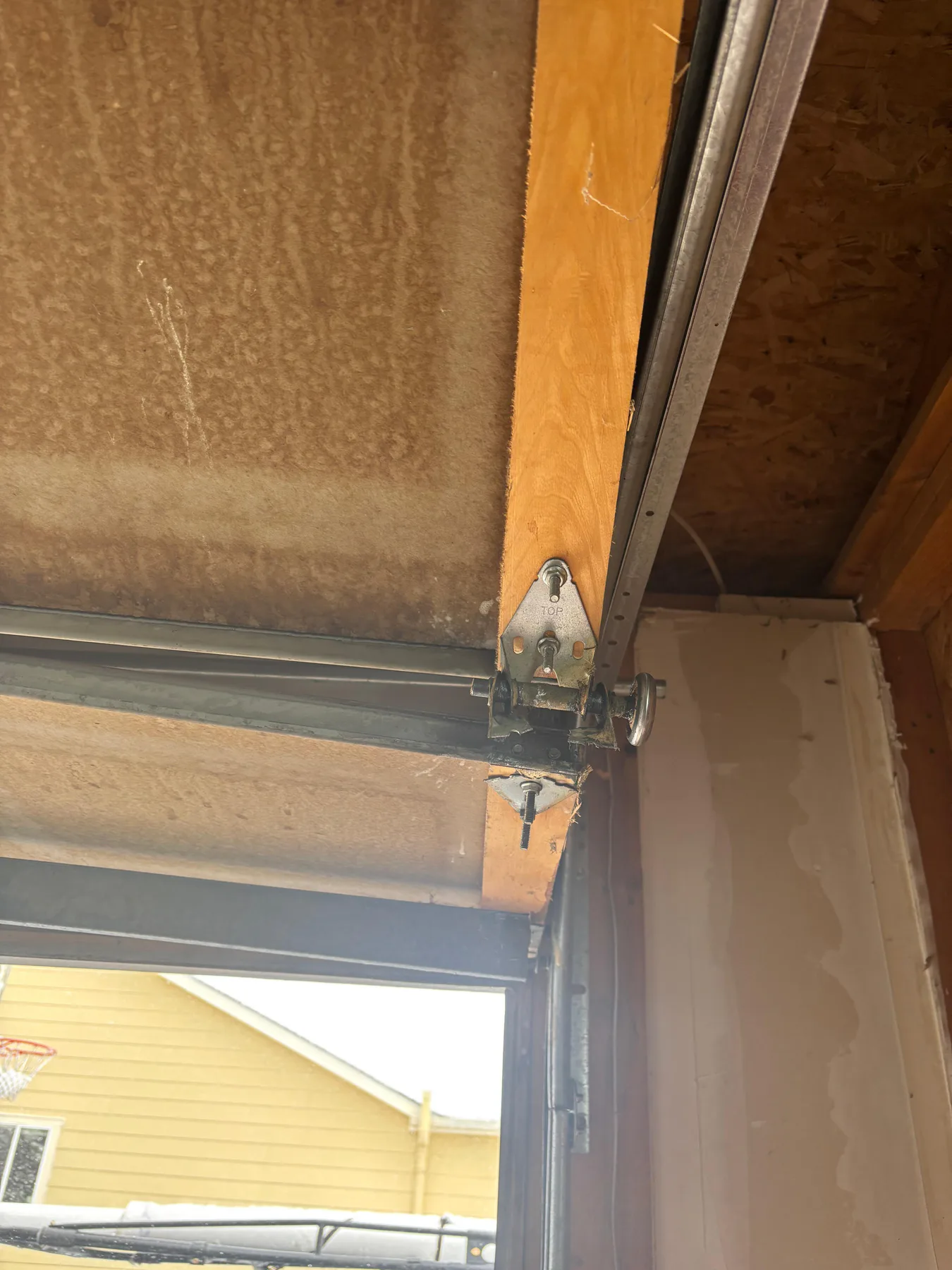
A roller outside the track is a structural warning, not just an alignment annoyance. The door's weight may no longer be controlled evenly, and cables or panels can be under abnormal stress. Stop movement immediately and isolate the area.
Never stand below it, remove a track bracket, or try to force the roller back with tools. If the door is partly open, keep everyone clear and call for service.
How a door leaves the track
Vehicle impact, a broken cable, a failed roller, loose track fasteners, or an object trapped near the bottom can pull a roller out of position. A heavy wood door or damaged section can increase the consequences when the system racks.
What the door's position tells the technician
A door off track near the floor suggests a different sequence than one hanging at the top curve. Whether the cable is tight, loose, or crossed also matters. Describe the position from a safe distance rather than approaching the hardware.
Why forcing it can increase the repair
Operating the opener can bend the top section, tear a hinge, pull the cable off the drum, or distort the vertical track. A repair that begins with one displaced roller can become a panel, cable, and track replacement if the door is cycled.
What professional stabilization and repair involve
The technician first controls the door's weight, then diagnoses cables, springs, rollers, hinges, track alignment, and panel condition. After components are restored, the door must travel smoothly by hand and remain balanced before the opener is reconnected and tested.
Maintenance that reduces off-track risk
Keep storage away from the tracks, avoid leaning ladders or equipment against them, watch for loose rollers or hinges, and address scraping or crooked movement early. After any vehicle contact, stop using the door until the system is inspected.
Quick answer
Stop using an off-track or visibly crooked door. A roller outside the track, a cable off the drum and a bent track are related conditions, but they are not interchangeable repairs. Keep the opening clear, disconnect power only if it can be reached safely, and do not pull the release beneath a suspended door.
Three failures that can look similar
| Visible condition | What it can mean | Why forcing it is risky |
|---|---|---|
| Roller outside the track | Impact, loose hardware, track spread or a cable problem | The section can fold and additional rollers can leave the track. |
| Cable loose or off a drum | Uneven tension, obstruction, drum or spring-system issue | The door can rack suddenly and the cable remains part of a tensioned system. |
| Track bent or pulled from framing | Impact or failed fastening | Straightening without checking alignment and support can leave a weak path. |
The work photo shows a wood garage door that had come off track in Security-Widefield. Because the condition and lack of maintenance had made the system unsafe, the homeowner chose a modern gray replacement with windows, completed in March 2026. That choice was specific to the door's condition and the customer's preference; an off-track call does not automatically require replacement.
What a complete inspection should connect
The technician should evaluate the door position, rollers, tracks, cables, drums, spring balance, hinges and damaged sections as one system. Re-centering a roller without finding why the door racked can leave the original cause in place. After stabilization, the door should be moved through its full travel by the appropriate procedure and the opener safety functions checked.
Frequently asked questions
Can one roller be put back without servicing the rest?
The visible roller may be only the result. Cables, hinges, tracks, panels, and balance should be checked for the cause and hidden damage.
Should I disconnect the opener?
Do not pull the release under a damaged or partially open door. The opener may be helping hold the system. Wait for professional direction.
Sources and further reading
Primary references were reviewed for this guide on October 12, 2026. Manufacturer instructions for the exact installed door and opener take priority over general guidance.
Describe the symptom, door position, and any visible damage when you call Garage Door Service Pro at (720) 513-4343. Keep clear of the opening when a spring, cable, roller, track, or section appears damaged.
This article provides general educational information, not a remote diagnosis. Stop operating a door that is crooked, unsupported, off track, or has a loose cable or damaged spring.