
High-cycle wear
Springs, rollers, hinges, and opener parts can show wear after years of daily movement.
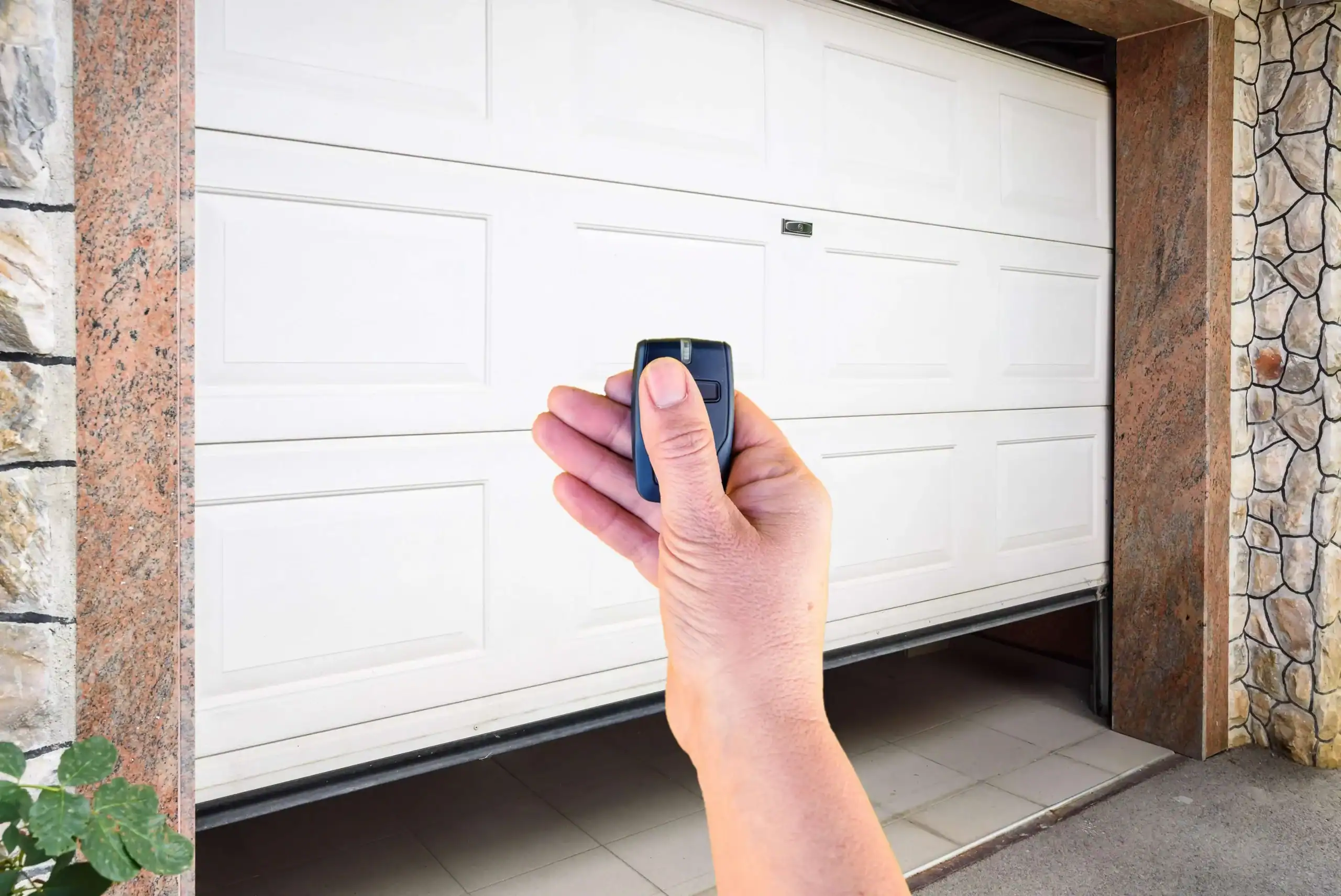
For many households, the garage door moves several times every day. Repeated cycles eventually reveal worn rollers, tired springs, loose hardware, sensor trouble, and opener strain. We help identify what failed and what the system needs next.
A garage door can complete thousands of cycles over time. Small changes—a new squeak, a pause near the floor, a shake through the track, or an opener that sounds strained—can be early signs that the system needs attention.
We inspect the door’s balance and movement before assuming the opener is the source. Springs carry the door’s weight, cables keep lifting even, rollers guide travel, sensors protect the closing path, and the opener controls movement. One weak part can affect the rest.
Security-Widefield service is confirmed by property ZIP code and schedule. If the garage is the household’s primary entrance, mention whether another safe entry is available when the door is stuck closed.
Springs, rollers, hinges, and opener parts can show wear after years of daily movement.
Dirty, misaligned, blocked, or damaged photo eyes can interrupt normal closing.
A heavy or binding door can make a working opener sound slow or overworked.
Squeaking, grinding, popping, or rattling should be traced to its actual source.
The goal is safe, predictable operation—not simply making the opener move one more time. We look for the cause of the symptom and explain the appropriate scope.
Inspection of the failed spring, remaining spring system, door weight, cables, drums, and balance.
Troubleshooting wall controls, remotes, sensors, drive parts, travel, limits, and door resistance.
Evaluation of worn rollers, noisy hinges, loose fasteners, shaking, and rough movement through the track.
Response to uneven lifting, loose cable, damaged track, displaced rollers, and doors that sit crooked.
Checks for alignment, wiring, obstructions, indicator lights, and other reasons a door reverses while closing.
Door condition, repair history, security, appearance, insulation, hardware, and opener fit are considered.
The original wood door at this Security-Widefield home had come severely off track. A door in that position can shift or fall without warning, so it should not be pulled, lifted, or forced with the opener.
After reviewing the condition and options, the homeowner preferred a new modern gray door with an asymmetric vertical window design. The replacement changed the appearance of the opening and provided a complete new door system rather than rebuilding the damaged wood door.
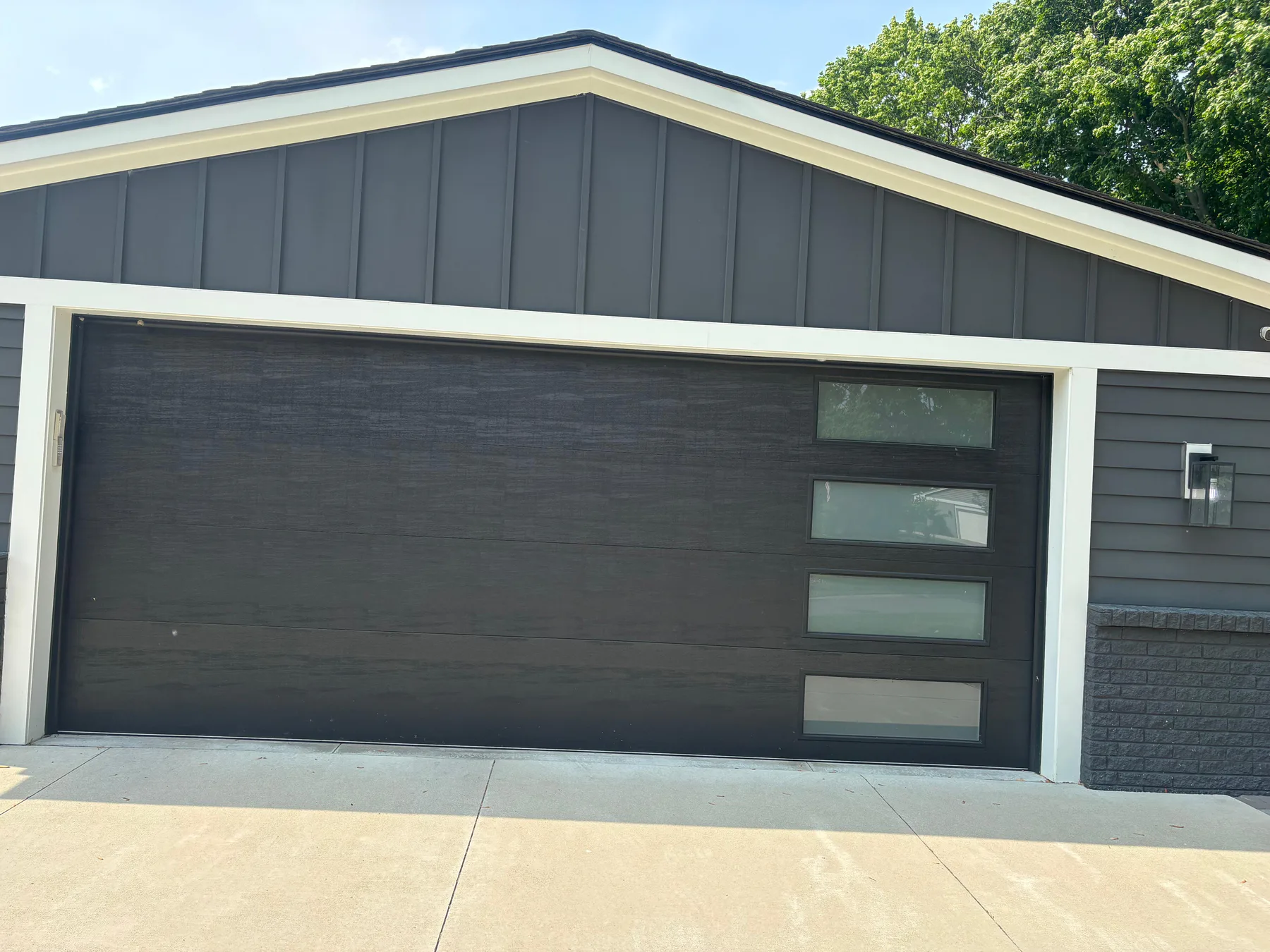
The first image shows the wood door displaced at the upper corner with the roller and hinge area no longer traveling correctly in the track. The second image shows the homeowner’s selected replacement after installation.
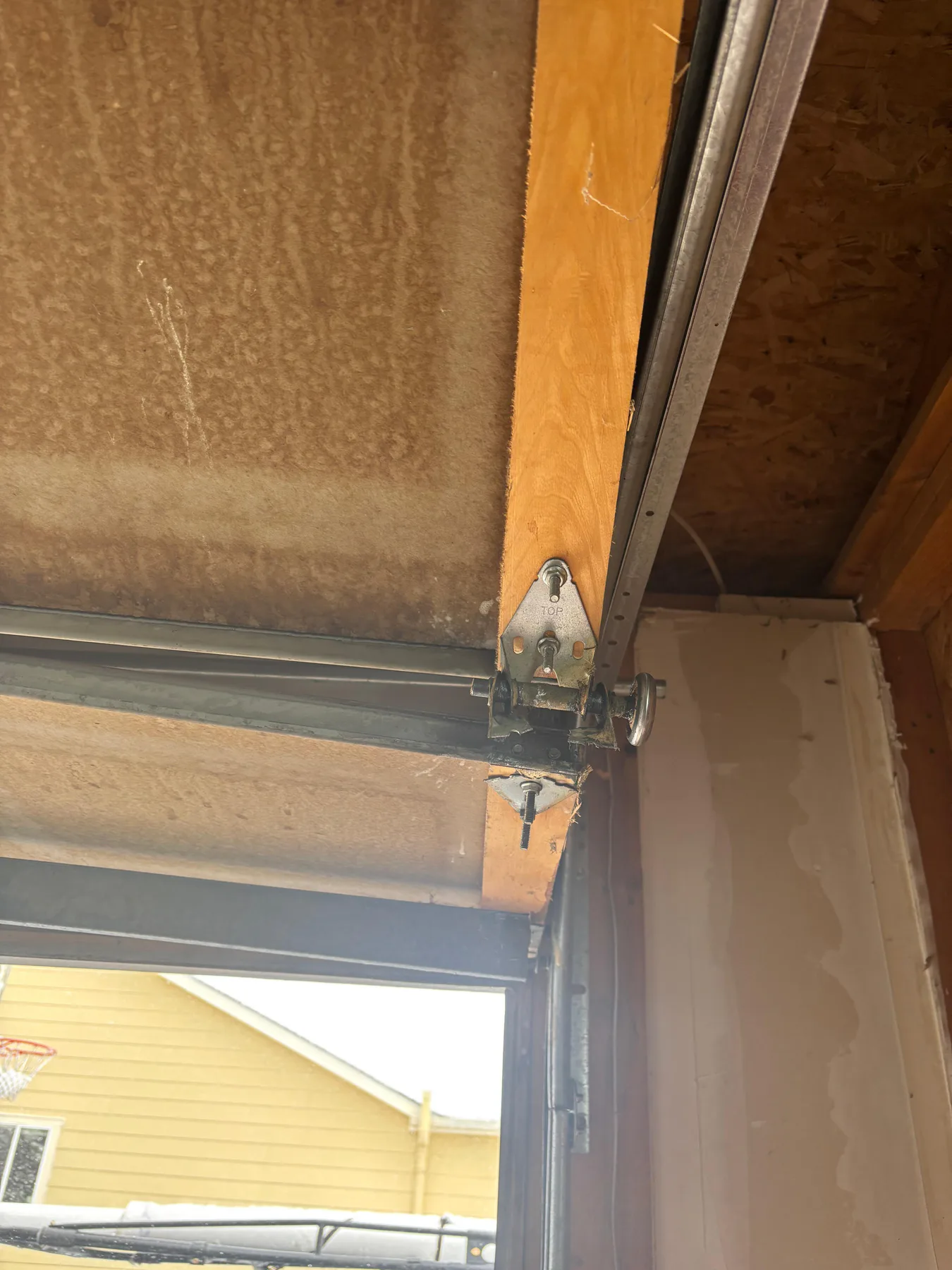
The upper hardware and roller area were displaced, creating an unstable condition that was not safe for normal operation.
The homeowner chose a contemporary gray door with vertical windows, installed as a complete balanced system.
Share the ZIP code, how often the door is used, and the sound, movement, or control problem you noticed.
Balance, hardware, cables, track, sensors, and opener behavior are evaluated to locate the actual cause.
We discuss the findings and the repair or replacement option that fits the system’s condition.
Loose cables, bottom brackets, and springs are not homeowner repair items. Keep a safe distance and stop operating the door.
More cycles can accelerate normal wear on springs, rollers, hinges, and opener components. Good balance and timely hardware service help prevent one worn part from placing extra load on another.
The sound may come from the opener, but worn rollers, loose hardware, dry contact points, track resistance, or poor door balance can also make the system louder. The full door should be inspected.
Scheduling depends on the property ZIP code, call time, route, and current workload. Call with the location and problem, and we will confirm the available service window without making an unsupported promise.
Do not force it or continue running the opener. Look from a safe distance for a broken spring, loose cable, or obstruction, then call and mention whether the garage is your primary household entry.
Call with your ZIP code and what happens when the wall control is pressed. Stop operating the door if it is heavy, crooked, or has a loose cable.