
When a garage door starts upward and stops after a few inches, the opener is often reacting to excessive resistance. The cause may be a broken spring, a cable or track problem, a locked door, or an opener fault. Continuing to press the remote can turn one repair into several.
Do not lift a damaged door from underneath, adjust opener force to overpower resistance, or touch loose cables and spring hardware.
The spring system is the first suspect
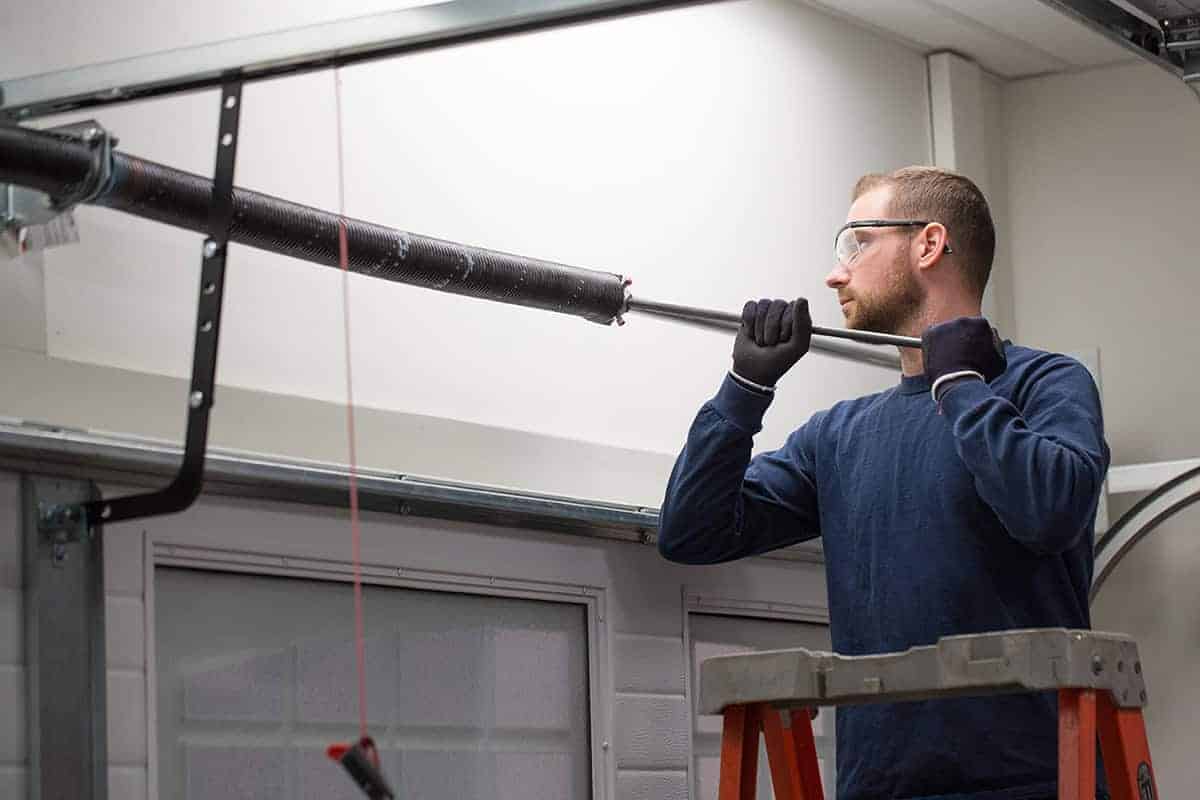
The opener moves a properly balanced door; it is not designed to replace the lifting assistance of the springs. A broken torsion spring often leaves a visible gap above the door. An extension spring problem may make one side rise unevenly. Either condition calls for professional service.
Check for simple obstructions without entering the hazard zone
From inside the garage, confirm that the manual slide lock is not engaged and that nothing is wedged in the tracks. Look for a bent track, displaced roller, dangling cable, or object resting against the door. Do not remove hardware to investigate.
What the opener's behavior can reveal
A motor that runs while the door barely moves suggests a door-system problem or a disconnected trolley. A motor that starts and stops may be sensing resistance. Error lights or diagnostic codes can help, but they should be interpreted with the owner's manual for the exact model.
Why increasing the force setting is not a repair
Force settings are safety-related. Raising the force to push through a binding door can mask the mechanical cause and reduce safe reversal performance. The correct sequence is to restore smooth, balanced door operation, then test opener travel and safety functions.
Information to provide when calling
Note whether the door is open or closed, whether you heard a bang, how far it rises, and whether both sides move evenly. A photo taken from a safe distance can be useful. Do not stand beneath a partially open door to take it.
Frequently asked questions
Can I help the opener by lifting the door?
Do not do this when a spring, cable, track, or roller may be damaged. The door can shift or fall, and the opener can start moving unexpectedly.
Could cold weather cause this symptom?
Cold can stiffen seals and lubricants, but a door that stops after a few inches still needs inspection for balance and hardware damage before weather is blamed.
Sources and further reading
This guide is based on manufacturer instructions and recognized safety and industry references. Always follow the manuals for your exact door and opener.
Describe the symptom, door position, and any visible damage when you call Garage Door Service Pro at (720) 513-4343. Keep clear of the opening when a spring, cable, roller, track, or section appears damaged.