
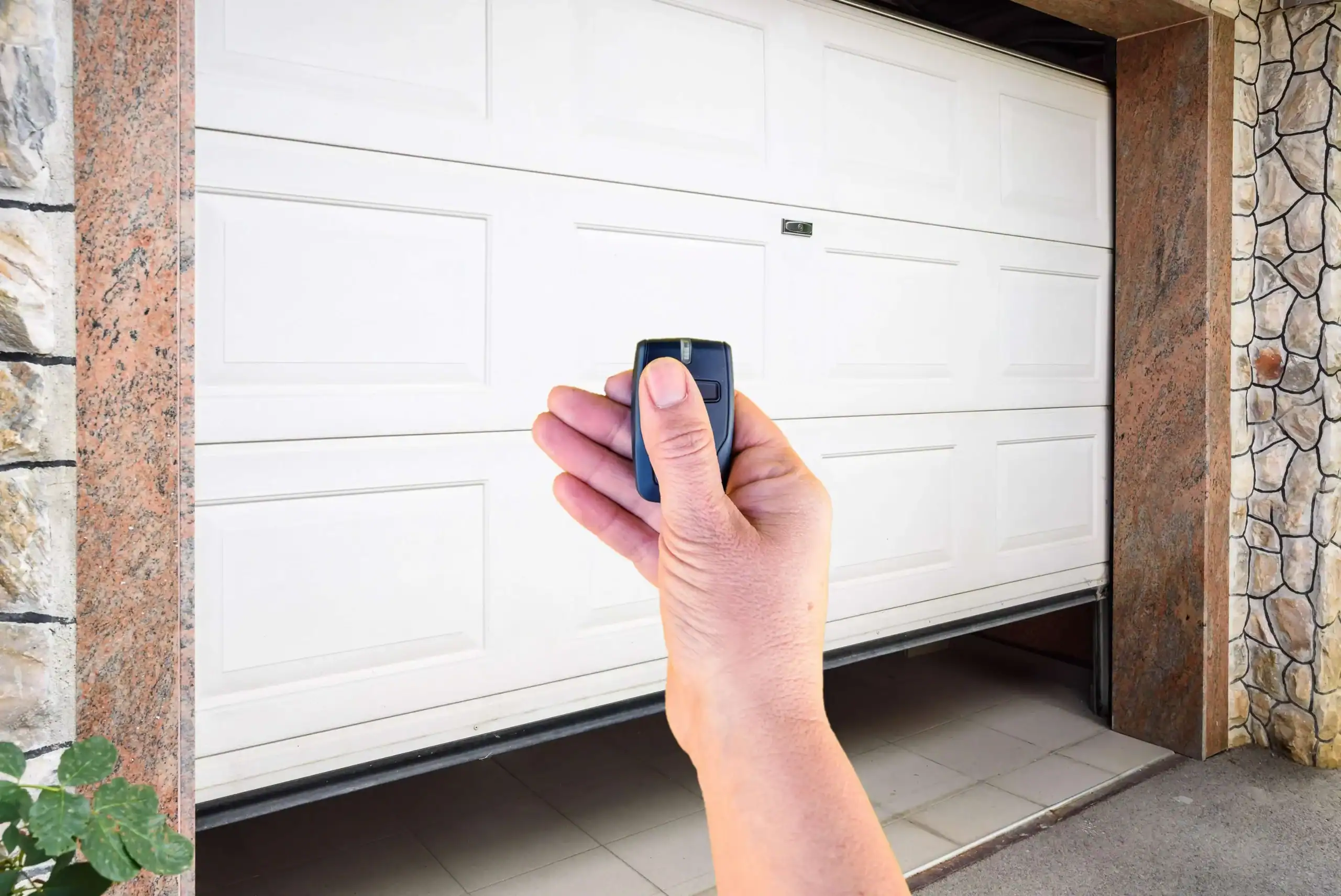
Many modern openers require a continuous press on the wired wall control when the photo-eye safety circuit is not functioning correctly. That behavior is a diagnostic clue, not a permanent workaround. The sensors protect people, pets, and property in the door's path.
Keep the opening clear and restore the manufacturer's safety system before returning the door to normal automatic operation.
What the wall-button symptom usually means
When a remote will not close the door but the wall control works only while held, the opener may not be receiving a valid clear-path signal from the photo eyes. Depending on the model, indicator lights or flashes can distinguish misalignment, wiring, or power issues.
Safe homeowner checks
Wipe the sensor lenses with a soft dry cloth, remove storage items from the beam path, and confirm that both units face each other without being twisted. Look for a loose connector or visibly damaged low-voltage wire, but do not splice or reroute wiring unless the manufacturer instructions specifically cover the task.
Correct sensor position matters
Federal safety requirements call for external entrapment protection on applicable residential openers. Manufacturer guidance commonly places photo eyes close to the floor; Chamberlain specifies no higher than six inches. Use the manual for the exact model rather than estimating placement.
Sunlight, vibration, and intermittent faults
Low-angle sunlight can occasionally interfere with a marginally aligned sensor. A bracket that vibrates when the door moves can also break the beam only during closing. Intermittent faults deserve attention because the system may pass one test and fail the next.
Testing after the correction
After restoring alignment or professional service, test the photo-eye reversal and the opener's contact-reversal function as directed in the owner's manual. If either test fails, disconnect automatic operation and arrange service.
Frequently asked questions
Can I keep using the door by holding the wall button?
Treat that behavior as a temporary diagnostic condition, not normal operation. The underlying safety issue should be corrected before routine use.
Why is one sensor light green and the other amber?
Light colors and meanings vary by brand and model. Check the owner's manual or diagnostic chart instead of relying on color alone.
Sources and further reading
This guide is based on manufacturer instructions and recognized safety and industry references. Always follow the manuals for your exact door and opener.
Describe the symptom, door position, and any visible damage when you call Garage Door Service Pro at (720) 513-4343. Keep clear of the opening when a spring, cable, roller, track, or section appears damaged.