
Torsion and extension springs perform the same basic job—counterbalancing the garage door—but they apply force in different ways. Understanding the system you have helps you describe a problem and evaluate a repair proposal without touching high-tension components.
Spring replacement, adjustment, conversion, and work on connected cables or bottom fixtures should be left to trained garage door professionals.
Where each spring is located
A torsion spring is normally mounted on a shaft above the door and winds as the door closes. Extension springs typically stretch along the horizontal tracks. Configurations vary by door and available headroom, so location alone is not a sizing guide.
How force reaches the door
Torsion systems use a shaft, cable drums, and lift cables to apply controlled torque. Extension systems stretch and contract, with pulleys and cables transferring force. Each system depends on correct geometry, matched components, and proper balance.
Safety and containment considerations
Extension springs should use containment or safety cables where specified so a broken spring is less likely to travel across the garage. Torsion springs remain on the shaft when they break, but winding and hardware service still require specialized tools and procedures.
Why some homeowners consider conversion
A properly designed torsion conversion may provide cleaner cable movement, easier balance adjustment, and fewer long components along the tracks. Suitability depends on door weight, headroom, shaft space, drums, and supporting structure—not preference alone.
Questions to ask before spring work
Ask how the replacement is sized, whether both sides and cables were inspected, what cycle rating is proposed, and how final balance will be verified. The best recommendation is based on the actual door system rather than a universal claim that one spring type fits every opening.
Quick answer
Torsion springs turn on a shaft above the door; extension springs stretch alongside the horizontal tracks. The correct choice depends on the door, available headroom, hardware configuration and manufacturer requirements—not on a universal claim that one system fits every garage.
When one spring breaks, should both be replaced?
On a matched two-spring system, the unbroken spring often has the same age and similar cycle history. Replacing both may restore a matched pair and reduce the chance of a second service interruption. That is not an automatic rule: identification, measured door weight, spring dimensions, prior modifications and remaining condition should drive the written recommendation.
Cycle ratings are planning information, not a calendar promise
A cycle is generally one full opening and closing. Actual life varies with use, correct sizing, corrosion, door weight changes and maintenance. A higher cycle rating can be useful for a frequently used garage, but it does not correct poor balance or damaged hardware.
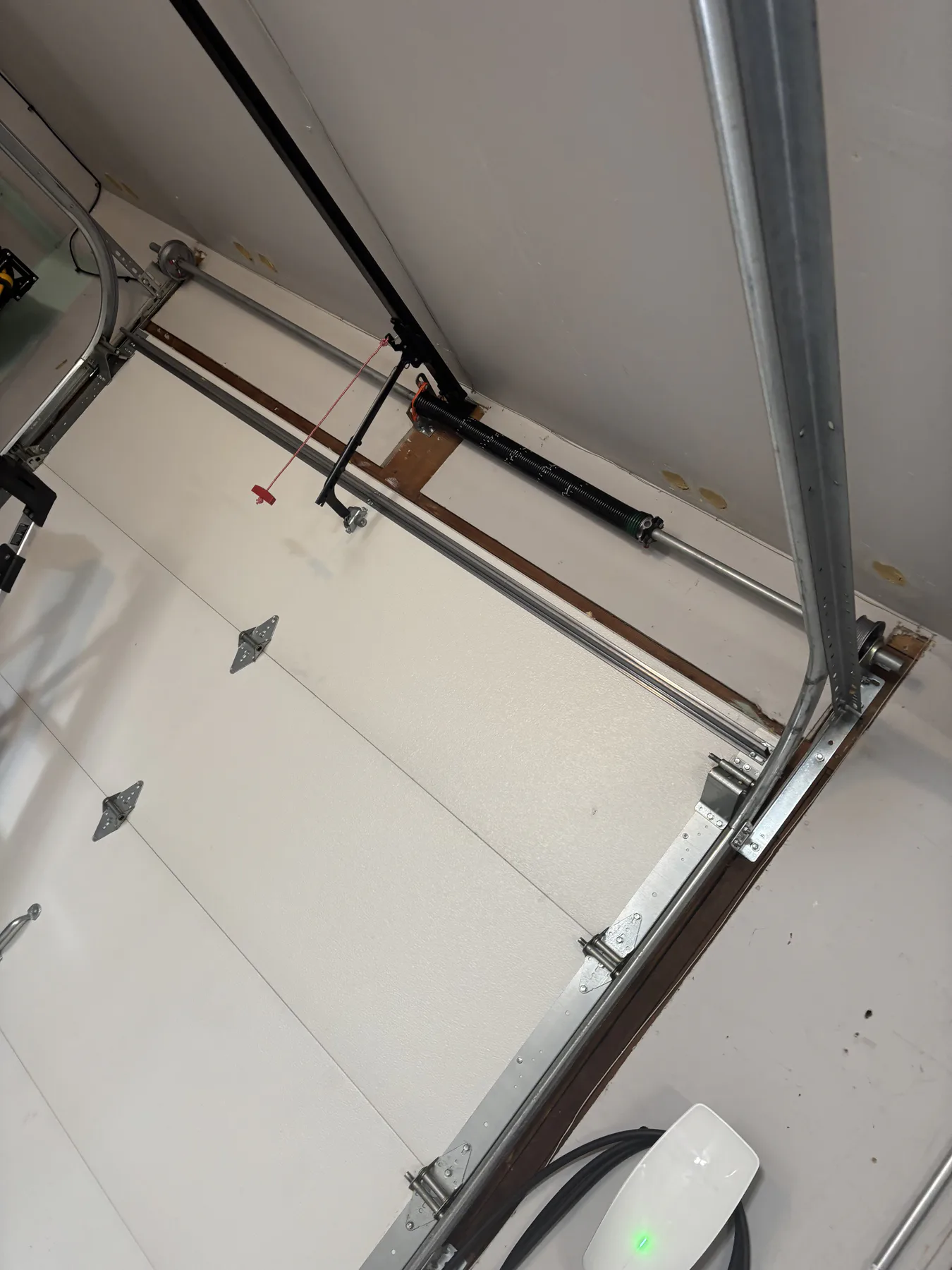
In December 2025, Garage Door Service Pro documented a broken extension spring at a Monument home and completed a torsion-system conversion. The photo shows the finished torsion assembly. The example demonstrates one property-specific solution, not a recommendation to convert every extension-spring door.
Frequently asked questions
Can an extension-spring door be converted to torsion?
Often, but not always. A technician must verify headroom, mounting support, door weight, tracks, drums, cables, and compatible hardware.
Which type lasts longer?
Service life depends on cycle rating, correct sizing, installation, environment, and use. Compare the specified spring cycle rating rather than relying on type alone.
Sources and further reading
Primary references were reviewed for this guide on October 12, 2026. Manufacturer instructions for the exact installed door and opener take priority over general guidance.
Describe the symptom, door position, and any visible damage when you call Garage Door Service Pro at (720) 513-4343. Keep clear of the opening when a spring, cable, roller, track, or section appears damaged.
This article provides general educational information, not a remote diagnosis. Stop operating a door that is crooked, unsupported, off track, or has a loose cable or damaged spring.